Pakistan and Turkey: From Friendship to Green Economic Growth

Pakistan and Turkey share a longstanding relationship built on mutual respect, cultural affinity and political goodwill. But the real potential of this friendship lies in transforming political ties into a stronger economic partnership—one that supports not only investment and trade, but also climate resilience, clean energy, sustainable industries and green jobs.
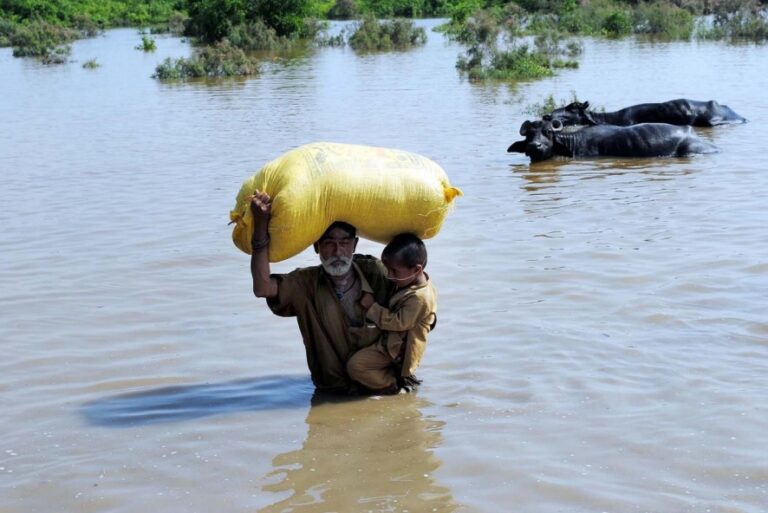
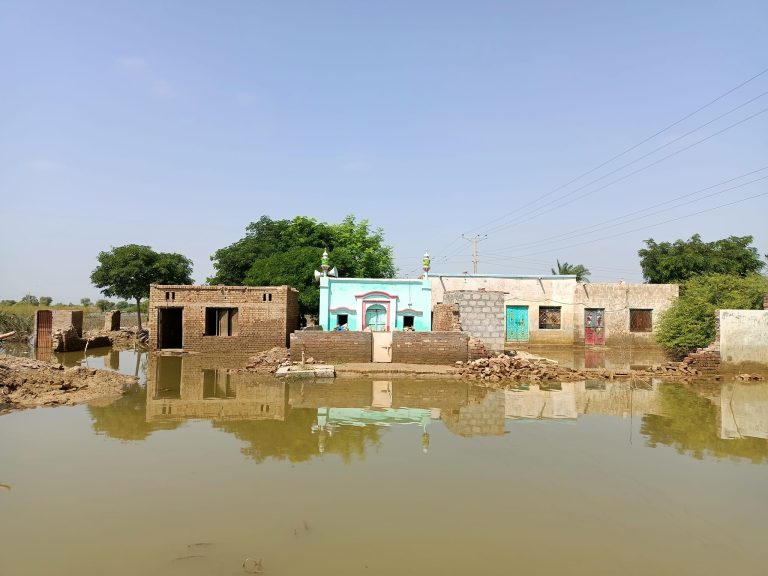
As Pakistan faces growing climate pressures, including extreme heat, water stress, floods, air pollution and rising energy costs, the country needs an economic growth model that can deliver industrial development without deepening environmental vulnerabilities. Turkey’s experience in industrialisation, infrastructure, renewable energy, manufacturing, tourism and private-sector development offers useful lessons that Pakistan can adapt to its own economic and environmental circumstances.
Green industrialisation as the next economic opportunity
Pakistan’s economy remains heavily dependent on agriculture, textiles and other traditional sectors. At the same time, many industries face high energy costs, outdated technologies, inefficient production systems and increasing climate risks.
Industrial diversification should therefore go hand in hand with green transformation. Pakistan needs to encourage manufacturing that uses less energy and water, produces less waste and pollution, and generates higher economic value.
Turkey’s development of automotive, machinery, appliances, engineering, food processing and other manufacturing sectors demonstrates the importance of building industrial capabilities rather than relying on a narrow range of exports. Pakistan can draw on this experience by developing industrial clusters focused on value-added and resource-efficient production.
The objective should not simply be to increase the volume of exports. Pakistan should aim to increase the value addition, productivity, technological content and environmental sustainability of its exports.
There are opportunities for Pakistan and Turkey to develop joint ventures and co-production in engineering goods, processed agricultural products, pharmaceuticals, information technology, electrical equipment, automotive components, renewable-energy equipment and other emerging sectors.
Turkish companies can contribute technology, management expertise and access to international markets, while Pakistani businesses can offer local resources, skilled and semi-skilled labour and access to regional markets.
Clean energy and industrial competitiveness
Reliable and affordable energy is essential for industrial competitiveness. For Pakistan, however, the energy challenge is also a climate challenge.
Industries dependent on expensive or inefficient fossil-fuel-based energy face both economic and environmental pressures. Pakistan needs greater investment in solar, hydropower, wind, energy efficiency, storage and other clean-energy solutions.
Turkey can become an important partner in this transition through investment, technology transfer, manufacturing partnerships and technical expertise.
The emphasis, however, should be on building local capacity rather than creating permanent dependence on imported technology. Joint ventures producing solar equipment, energy-efficient machinery, electrical components and other clean technologies in Pakistan could create jobs while strengthening domestic manufacturing.
Energy efficiency should receive equal attention. In many cases, reducing energy consumption through modern machinery, efficient buildings, better industrial processes and digital monitoring can be as important as adding new generation capacity.
Climate-smart agriculture and food processing
Agriculture remains central to Pakistan’s economy, livelihoods and food security, but it is increasingly exposed to climate-related risks. Heatwaves, floods, changing rainfall patterns, water shortages and declining soil health can affect agricultural productivity and rural incomes.
Pakistan can benefit from cooperation with Turkey in climate-smart agriculture, irrigation efficiency, agricultural technology, food processing, cold-chain infrastructure and value addition.
Instead of exporting agricultural commodities with limited processing, Pakistan should develop stronger links between farms, food-processing industries and domestic and international markets.
Value-added agricultural products can generate greater export earnings while reducing post-harvest losses and creating employment in rural areas.
Investment in efficient irrigation, water conservation, renewable-powered agricultural systems and climate-resilient crops can also strengthen the resilience of farming communities.
SMEs need green finance and technology
Thousands of small and medium-sized enterprises form the backbone of competitive economies. In Pakistan, SMEs need better access to finance, technology, digital markets, skills and export information.
The green transition presents both a challenge and an opportunity for these businesses.
Pakistani SMEs can become suppliers to larger industries involved in renewable energy, electric mobility, energy efficiency, recycling, sustainable packaging and resource-efficient manufacturing. Partnerships with Turkish companies could help Pakistani SMEs access technology, technical training and international value chains.
Green finance will also be important. Banks and financial institutions should develop financing mechanisms that enable smaller businesses to invest in energy-efficient machinery, renewable energy, waste reduction and cleaner production.
Skills for a green economy
Pakistan’s long-term competitiveness cannot depend on low-cost labour alone. Productivity, skills, innovation and technological capacity will determine whether Pakistani industries can compete in increasingly demanding global markets.
Technical and vocational education therefore needs to be aligned with the industries of the future.
Pakistan should expand training in renewable energy, electrical and mechanical technologies, energy management, environmental monitoring, water efficiency, waste management, digital manufacturing and other green skills.
Partnerships between Pakistani and Turkish universities, technical institutes and companies could support vocational training, industrial research, apprenticeships and technology transfer.
A workforce equipped for the green economy would not only improve industrial productivity but also create new employment opportunities for Pakistan’s young population.
Connectivity must become climate-resilient
Pakistan’s geographic position gives it considerable strategic potential as a connection between South Asia, China, Central Asia, the Middle East and wider international markets. But geography alone does not create economic opportunity.
Efficient ports, railways, roads, customs systems and digital logistics are essential.
At the same time, new infrastructure must be designed for a changing climate. Flood-resilient roads and bridges, efficient rail systems, climate-resilient ports, improved urban drainage and energy-efficient logistics infrastructure can reduce both economic losses and emissions.
Improved connectivity between Pakistan and Turkey could strengthen trade between the two countries while also opening routes towards Central Asian, Middle Eastern and European markets.
Sustainable tourism and cultural heritage
Turkey’s tourism sector provides another area from which Pakistan can learn.
Pakistan has mountains, rivers, forests, archaeological sites, historic cities and diverse cultural landscapes with significant tourism potential. Yet many destinations lack adequate infrastructure, professional hospitality services, waste-management systems, digital promotion and reliable transport.
Tourism development should therefore be pursued through a sustainable model that protects natural ecosystems and cultural heritage while creating local employment.
Cooperation with Turkish tourism institutions and businesses could support training, destination management, digital marketing, hospitality services and investment.
Pakistan should aim for tourism that generates foreign exchange without destroying the natural and cultural assets upon which the sector depends.
Foreign investment should deliver more than capital
Foreign investment should not be measured simply by the amount of money entering the country.
The quality of investment matters.
Productive foreign direct investment should create jobs, transfer technology, develop local suppliers, improve productivity and generate exports. Turkish investment in manufacturing, clean energy, infrastructure and technology-oriented industries could therefore have a greater long-term impact than investment focused only on short-term financial returns.
For this to happen, Pakistan needs a stable investment climate, transparent processes, predictable regulations and effective institutions.
Investors need confidence that economic, tax, trade and investment policies will not change unpredictably.
Policy continuity is essential
Perhaps one of the most important lessons Pakistan can draw from international industrial development experiences is the importance of policy continuity.
Industrialisation and green economic transformation cannot be achieved through short-term schemes. Businesses need long-term certainty before making major investments in factories, technology, training and research.
Pakistan should develop long-term industrial, export and climate strategies that survive political cycles.
Subsidies and protection can sometimes support emerging industries, but they cannot be permanent substitutes for competitiveness. The ultimate objective should be to move from protection to competition and prepare Pakistani industries to compete successfully in international markets.
Measuring the partnership differently
Pakistan-Turkey economic cooperation should not be measured only through the value of bilateral trade or the number of investment agreements signed.
Success should also be measured by the number of joint ventures created, technologies transferred, workers trained, SMEs connected to international value chains, renewable-energy projects developed, factories modernised, emissions reduced and value-added products exported.
Such indicators would provide a clearer picture of whether economic cooperation is contributing to sustainable development.
Pakistan possesses a large domestic market, a young population, agricultural resources, entrepreneurial potential and a strategically important geographical position. What it needs is a consistent development strategy that connects industry with exports, agriculture with value addition, education with skills, infrastructure with climate resilience, finance with green investment, and research with innovation.
Turkey can play a meaningful role in this transformation.
The objective, however, should not be to make Pakistan another Turkey. The objective should be to learn from Turkey’s experience and adapt relevant lessons to Pakistan’s own economic, social, environmental and institutional realities.
Pakistan’s long-standing friendship with Turkey can become a powerful engine of shared prosperity if it evolves into a partnership focused on productive industries, diversified exports, clean energy, climate resilience, technology transfer and human capital.
For Pakistan, the future of economic growth cannot be separated from the future of the environment. The countries that succeed in the coming decades will be those that can create jobs and prosperity while using energy, water and natural resources more efficiently.
That is where Pakistan-Turkey cooperation can move beyond traditional friendship—and become a partnership for green growth, climate resilience and shared prosperity.
About Author:

Masood Ahmad Khan is Lecturer Business Administration at University of Agriculture Faisalabad Sub Campus Burewala.
”Very informative article. Empowering small and medium enterprises (SMEs) and encouraging cross-border investments can further accelerate this economic partnership.”
”Very informative article. Empowering small and medium enterprises and encouraging cross-border investments can further accelerate this economic partnership.”