Middle East Conflict, Rising Fuel Prices and Pakistan’s Climate-Economy Challenge

The ongoing tensions and conflict in the Middle East involving the United States, Iran and Israel are not only reshaping regional geopolitics but are also creating serious economic challenges for countries like Pakistan. One of the most immediate impacts has been the sharp increase in global fuel prices. As a country heavily dependent on imported petroleum products, Pakistan is particularly vulnerable to fluctuations in international oil markets. However, beyond the economic consequences, this crisis also highlights Pakistan’s growing climate and energy vulnerabilities.
The rise in fuel prices exposes a deeper structural problem: Pakistan’s continued dependence on fossil fuels at a time when climate change is already placing immense pressure on the country’s economy, agriculture, water resources and public health. The current crisis should therefore not only be viewed as an economic emergency but also as a warning about the urgent need for a climate-resilient and sustainable energy transition.
Inflation, Energy Costs and Climate Vulnerability
A significant rise in inflation is among the most immediate effects of increasing fuel prices. Transportation, electricity generation, industrial production and food supply chains all depend heavily on fuel. As petrol and diesel prices rise, transportation costs increase, pushing up the prices of essential commodities such as wheat, vegetables and other daily necessities.
This cost-push inflation reduces the purchasing power of ordinary citizens, particularly low-income households already struggling with rising living costs. Climate change further worsens this situation. Heatwaves, floods and irregular rainfall patterns have already damaged agricultural production in Pakistan over recent years, contributing to food shortages and price instability. When climate-induced agricultural stress combines with higher fuel and transportation costs, food insecurity becomes even more severe.
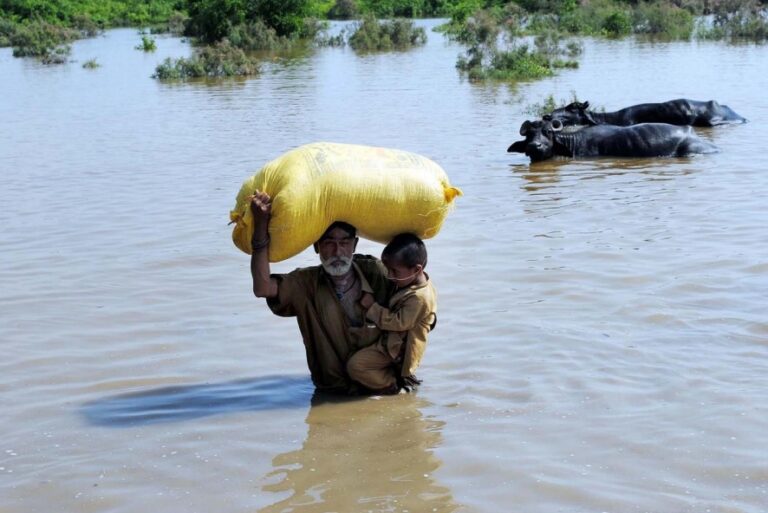
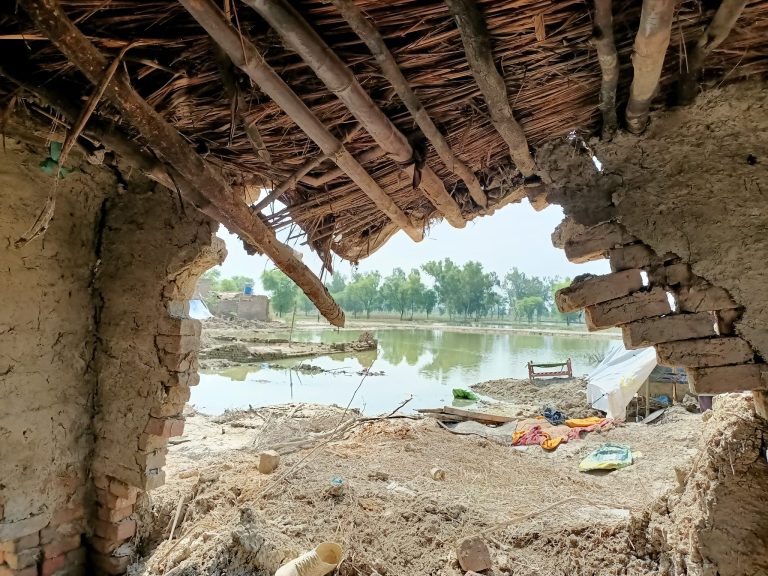
Pakistan’s devastating 2022 floods demonstrated how climate disasters can cripple economic activity, destroy infrastructure and increase poverty. Now, rising energy prices linked to geopolitical conflict are adding another layer of pressure to an already fragile economy.
Pressure on the Economy and Foreign Exchange
Higher oil import bills are expected to widen Pakistan’s trade deficit and increase demand for foreign currency. This puts additional pressure on the Pakistani rupee, causing further depreciation. As the currency weakens, imports become even more expensive, creating a cycle of inflation and economic instability.
Climate change also contributes to this economic vulnerability. Pakistan spends billions annually dealing with climate-related disasters, rebuilding damaged infrastructure and supporting affected communities. These climate costs reduce the country’s fiscal space and limit the government’s ability to absorb external economic shocks such as rising fuel prices.
The situation becomes more challenging as Pakistan balances public relief measures with commitments to international financial institutions. Without structural reforms, repeated external shocks—whether caused by conflict, oil crises or climate disasters—will continue to destabilize the economy.
Impact on Consumers and Daily Life
For ordinary citizens, the effects are immediate and painful. Transport fares, electricity bills and food prices rise simultaneously, while salaries largely remain stagnant. As household expenses increase, families are often forced to reduce spending on healthcare, education and nutrition.
Energy poverty is becoming a growing concern in Pakistan. Many low-income households already struggle to afford electricity and fuel, particularly during extreme weather conditions. Climate change intensifies this challenge. Increasing temperatures are driving greater electricity demand for cooling, while energy shortages and rising fuel costs make access to affordable power more difficult.
Urban areas such as Faisalabad, Lahore and Karachi are already facing worsening air pollution and heat stress. Continued reliance on fossil fuels not only increases economic vulnerability but also contributes to environmental degradation and greenhouse gas emissions.
Businesses, Industry and Environmental Costs
Rising fuel prices are equally damaging for businesses and industries. Diesel remains essential for transportation, manufacturing and agriculture. Higher operational costs force businesses to either absorb financial losses or raise prices, which can reduce consumer demand.
Small and medium-sized enterprises, already operating under economic pressure, are particularly vulnerable. Pakistan’s export sector may also suffer because higher production costs reduce international competitiveness.
At the same time, industries dependent on fossil fuels contribute significantly to air pollution and carbon emissions. The current energy crisis demonstrates why Pakistan must accelerate investment in cleaner and renewable energy alternatives. Reducing dependence on imported oil is not only an economic necessity but also a climate imperative.
Agriculture, Food Security and Climate Stress
Pakistan’s agriculture sector, which forms the backbone of the national economy, is highly sensitive to fuel price increases. Farmers rely on diesel for tractors, tube wells and transporting crops to markets. As fuel prices rise, agricultural production costs increase, eventually raising food prices for consumers.
Climate change is already affecting crop yields through water shortages, heatwaves, unpredictable rainfall and pest outbreaks. Rising fuel prices further compound these challenges by increasing the cost of irrigation, fertilizers and transportation.
This combination threatens national food security and rural livelihoods. Small farmers, in particular, are likely to face severe financial stress, increasing poverty and inequality in rural communities.
A Climate and Energy Transition Opportunity
While the current situation presents serious challenges, it also offers Pakistan an opportunity to rethink its development model and energy policies.
The crisis clearly demonstrates the risks of relying heavily on imported fossil fuels. Pakistan must accelerate its transition toward renewable energy sources such as solar, wind and hydropower. Expanding clean energy infrastructure can help reduce fuel imports, lower emissions and improve long-term energy security.
Pakistan has enormous potential for solar energy, particularly in regions receiving high sunlight throughout the year. Encouraging rooftop solar systems, investing in renewable-powered public transport and promoting electric vehicles can significantly reduce dependence on imported oil.
Improving public transportation systems and urban planning can also reduce fuel consumption and lower air pollution. At the same time, energy-efficient technologies and climate-smart agriculture can help communities adapt to both economic and environmental pressures.
The Need for Long-Term Policy Reforms
In the short term, the government can provide targeted relief to vulnerable populations, regulate transportation fares and support farmers affected by rising fuel prices. However, temporary measures alone are insufficient.
Pakistan needs broader structural reforms focused on climate resilience, energy diversification and sustainable economic growth. Increasing exports, improving energy efficiency and stabilizing the currency will be essential for building resilience against future external shocks.
The current fuel crisis linked to Middle East tensions should serve as a wake-up call. Economic stability, environmental sustainability and climate resilience are deeply interconnected. Without reducing dependence on fossil fuels and investing in clean energy solutions, Pakistan will remain exposed to repeated economic and climate-related crises.
A sustainable future requires moving beyond short-term firefighting toward long-term planning that prioritizes renewable energy, climate adaptation and inclusive economic development.
Authors:
 Masood Ahmad Khan, working as Lecturer in the department of Business Administration, University of Agriculture Faisalabad-Constituent College Burewala and currently doing PhD in the field of Agri-Business from Institute of Business Management Sciences, University of Agriculture Faisalabad

Hafiz Muhammad Haroon, working as Lecturer in the department of Computer Science, University of Agriculture Faisalabad-Constituent College Burewala and currently doing PhD in the field of Artificial Intelligence from The Islamia University of Bahawalpur.