Hunza Group Leads Climate-Focused Dialogue to Promote Ethanol as Green Fuel

FAISALABAD: At a time when Pakistan faces mounting climate challenges and rising dependence on imported fuels, Hunza Sugar Mills has taken a significant step toward promoting ethanol as a sustainable alternative energy source.
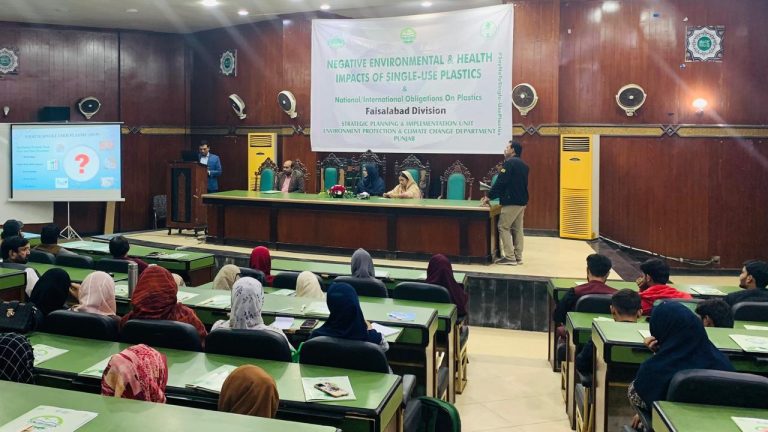
The company’s Ethanol Distillery Unit hosted an industry–academia dialogue on sustainable bioenergy and emerging fuels, bringing together policymakers, environmental regulators, academics, and industry leaders to explore solutions for reducing carbon emissions and strengthening energy security.
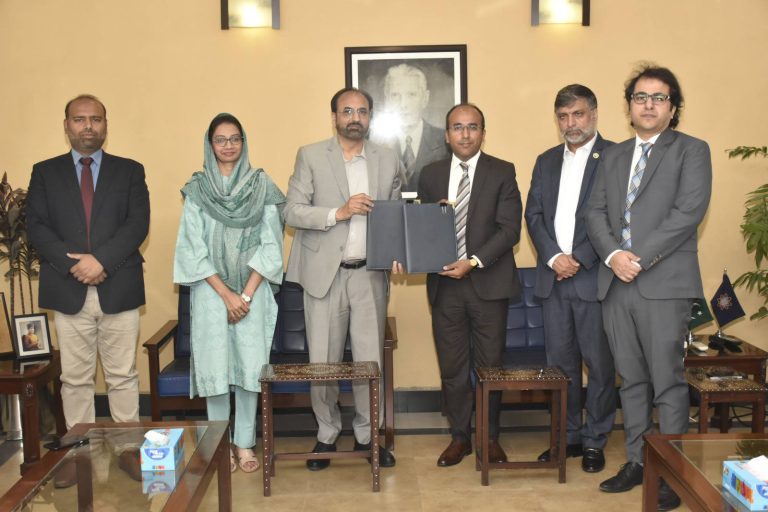
The event was attended by prominent participants including Prof. Dr. Rana Iqrar Ahmad Khan (Chairman, Punjab Higher Education Commission), Prof. Dr. Shahid Imran (Vice Chancellor, Baba Guru Nanak University Nankana Sahib), Prof. Dr. Kanwal Ameen (Vice Chancellor, GC Women University Faisalabad), Prof. Dr. Rauf-i-Azam (Vice Chancellor, GC University Faisalabad), and Prof. Dr. Zulfiqar Ali (Vice Chancellor, University of Agriculture Faisalabad). Representatives from regulatory bodies also participated, including Eng. Rahil Pitafi (Joint Executive Director, OGRA) and Dr. Zafar Iqbal (Additional Director General Operations, EPA Punjab).
The dialogue was academically facilitated by Prof. Dr. Rana Shahid Iqbal (Principal, University of Education Faisalabad Campus), serving as Honorary Strategic Advisor, and Dr. Sumaira Naeem (Head of Chemistry Department, Baba Guru Nanak University), who served as Honorary Academic Advisor.
The initiative, led by Sheikh Muhammad Usman (General Manager, Ethanol Distillery & CO₂ Unit) and Brig. (R) Shahbaz Rasul, (Group Head), reflects a progressive model where industry actively engages academia, regulators, and policymakers to address national energy challenges.
A detailed technical presentation was delivered by Muhammad Waqas Shakeel (Deputy Manager Process CO₂ and Head of Compliance) along with Muhammad Ali Raza (Assistant General Manager Electrical). The presentation covered bioethanol and carbon dioxide production from sugarcane molasses, biogas generation through effluent treatment, ethanol export potential, and future renewable fuel pathways. It also highlighted compliance with the ISCC-EU (International Sustainability and Carbon Certification – European Union) standards under the “Farm to Fork” concept.
A key highlight of the event was the ongoing ISCC-EU audit conducted by SGS Germany, represented by auditor Ts. Mohd Syafiq Zawawi. Upon certification, Hunza is set to become Pakistan’s first distillery to achieve this standard across the entire value chain—from agricultural production to end-use—enabling access to European markets.
The discussion emphasized that although Pakistan has around 20 distilleries producing bioethanol, it still lacks a formal national fuel blending framework. Participants strongly recommended introducing E10 fuel (petrol blended with 10 percent ethanol), which could reduce fuel imports, conserve foreign exchange, and lower carbon emissions.
Experts highlighted ethanol’s potential as a cleaner fuel derived from sugarcane molasses, capable of significantly reducing greenhouse gas emissions compared to conventional fossil fuels. The importance of developing a circular bioeconomy was also underscored, with the distillery showcasing its efforts to convert industrial waste into energy through biogas production. Plans to refine methane into renewable natural gas (RNG) were also discussed as a viable alternative to imported LNG.
Environmental experts and regulators stressed the urgency for Pakistan’s industrial sector to transition toward renewable energy, particularly as global markets increasingly demand environmentally sustainable production practices.
Academics and policymakers called for stronger collaboration between industry and research institutions to drive innovation in green fuels and climate-resilient technologies. They emphasized that long-term policy support, investment in research and development, and regulatory facilitation are essential to scale up ethanol production and adoption.
As Pakistan grapples with climate change impacts and an ongoing energy crisis, initiatives like this signal a growing recognition that biofuels—particularly ethanol—can play a vital role in shaping a cleaner and more sustainable energy future.