WASA Projects Fuel Smog Rise in Faisalabad
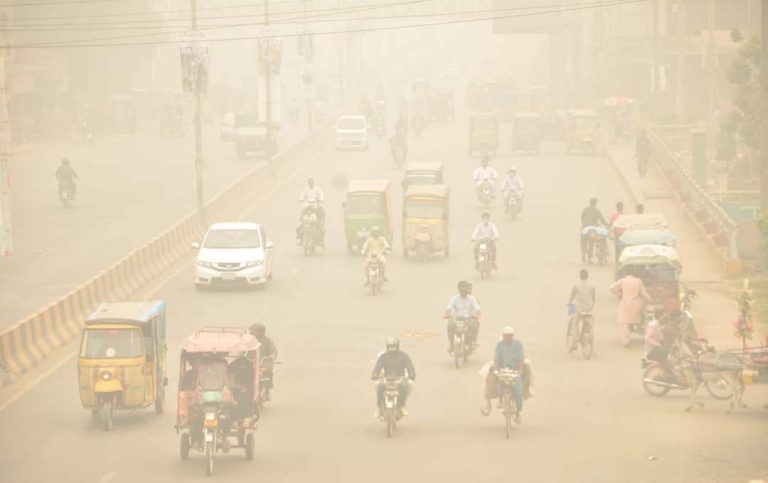
The Punjab government has introduced several notable measures in Lahore to curb smog and reduce environmental pollution, efforts that earned Chief Minister Maryam Nawaz Sharif appreciation at the global climate conference COP-30. However, Faisalabad remains an unfortunate exception, where anti-smog and environmental protection measures exist largely on paper. A major reason is that the local administration, instead of mitigating pollution, has inadvertently become one of its biggest contributors.
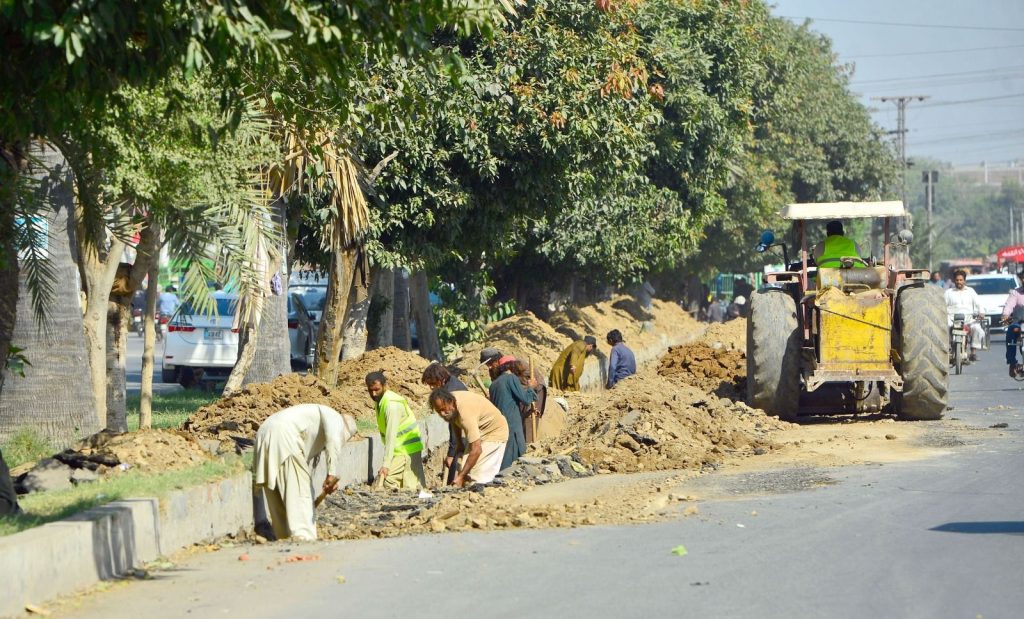
Faisalabad has been experiencing persistent smog for several years, but the situation has worsened this season due to the Water and Sanitation Agency’s (WASA) ongoing Annual Development Programme. With no rainfall since October 6, dust pollution has intensified across the city. Simultaneously, WASA is carrying out extensive excavation work across multiple neighbourhoods for water supply and sewerage pipelines. In most areas, after digging trenches, the roads and footpaths have not been restored to their original condition; instead, loose soil has simply been dumped over them and left unattended.
In areas where excavation is still ongoing, there is almost no implementation of dust-control measures—no water sprinkling, no temporary coverings, and no enforcement of anti-smog protocols. As a result, thick clouds of dust rise day and night, leaving residents struggling with cough, flu, eye irritation, throat infections, and respiratory illnesses.
Under WASA’s Annual Development Programme, 14 water supply and drainage schemes worth Rs 11 billion have been underway since October 1. According to WASA’s own data, nearly 50 percent of the work has already been completed, while construction on the French Water Treatment Plant continues round-the-clock. Contractors have also been directed to complete all schemes by June 2026. Additionally, they must lay at least 2,000 feet of pipeline every week; those failing to meet this target will be replaced. This pressure to meet deadlines explains the pace of excavation and the environmental mess being created.
Although WASA Managing Director Sohail Qadir Cheema has repeatedly instructed contractors to clear each site after laying pipelines and to remove all debris and soil, the instructions largely remain unimplemented. The absence of any monitoring mechanism has resulted in a situation starkly opposite to the official directives.
On the one hand, contractors are being pushed to speed up the work; on the other, no system exists to ensure that environmental safeguards are followed. The people of Faisalabad are paying the price for this imbalance, forced to breathe toxic dust while the smog crisis continues to escalate.
It is worth mentioning that Commissioner Faisalabad, Raja Jahangir Anwar, has already directed the relevant government departments to strictly implement anti-smog measures. Earlier this month, during a meeting on smog prevention, the Commissioner imposed a ban across the division on cleaning roads and streets without prior sprinkling of water (dry sweeping). He strictly instructed the Deputy Commissioners and Assistant Commissioners of all four districts in the division to ensure water sprinkling before any cleaning activity.
To prevent dust and particulate matter from spreading, he also directed the Faisalabad Waste Management Company (FWMC) to make it mandatory for its workers to sweep only after water sprinkling. He clearly warned that if dry sweeping is observed anywhere, the concerned FWMC in-charge will be held responsible.
Additionally, the Commissioner instructed the Environment Protection Department to ensure 100% compliance with the department’s SOPs at all under-construction sites. He ordered immediate action against any government or private construction site where water sprinkling is not carried out, including issuing challans, imposing fines, and sealing sites for repeated violations.
However, despite the Commissioner’s directives, the Environment Department has taken almost no action apart from issuing challans to a few private building owners and contractors. Furthermore, private contractors hired under the Faisalabad Waste Management Company continue to clean streets and roads without water sprinkling. Waste workers are also burning garbage in streets and empty plots, further worsening pollution.
Residents say the Punjab government has completely neglected Faisalabad when it comes to environmental protection, anti-smog measures, and reducing air pollution. As a result, the administration and government departments are not taking these issues seriously. This situation is particularly alarming given that Faisalabad is the second-largest city in Punjab in terms of population and industry, yet implementation of anti-smog measures remains almost non-existent.