WASA Launches Climate-Resilient Rainwater Recharge Project to Tackle Flooding and Water Scarcity in Faisalabad
FAISALABAD: In a city increasingly vulnerable to climate change–driven urban flooding, groundwater depletion, and water contamination, the Water and Sanitation Agency (WASA) Faisalabad has launched a project to construct a recharge well and an underground rainwater storage tank in Madina Town to improve stormwater management and groundwater recharge ahead of the upcoming monsoon season.
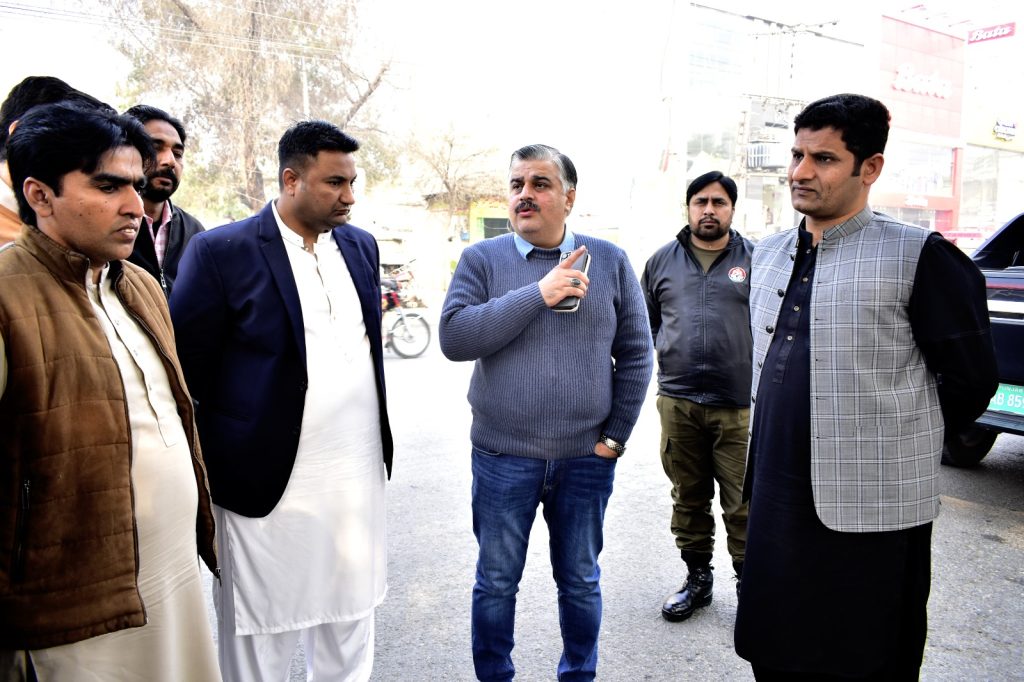
Under the initiative, a recharge well will be constructed on the green belt of Susan Road, while an underground storage tank will be built on the green belt adjacent to Faizan Madina Chowk. Managing Director WASA Saqib Raza, along with Director General Parks and Horticulture Authority (PHA) Dilawar Khan Chadhar, Deputy Managing Director Usman Latif, and other officials, inspected the proposed sites and issued on-the-spot instructions to expedite the work.
Speaking on the occasion, MD WASA Saqib Raza said that Faisalabad is facing mounting challenges due to erratic rainfall patterns, waterlogging during monsoon spells, and a steadily declining groundwater table — all of which are being intensified by climate change and unplanned urbanisation. He said the project is being implemented under the Clean Punjab Programme of Chief Minister Maryam Nawaz Sharif to ensure sustainable drainage solutions and protect the city’s rapidly depleting water resources.
He explained that rainwater collected through the recharge well on Susan Road will not only help in quick disposal of stormwater but will also allow water to percolate naturally into the ground, contributing to the replenishment of groundwater aquifers. Faisalabad largely depends on groundwater for domestic and industrial use, yet excessive extraction and contamination from sewage have pushed water scarcity to alarming levels.
The underground storage tank near Faizan Madina Chowk will temporarily store rainwater during heavy downpours, reducing pressure on the sewerage system and minimising the risk of urban flooding. The stored water will later be released into the sewerage network in a controlled manner, helping prevent overflows and contamination of surface and groundwater.
MD WASA said the PHA administration has been taken on board to ensure that green belts affected by the construction are restored with plantation, enhancing urban greenery and improving climate resilience. He added that the project aims to set a model for climate-adaptive infrastructure in Faisalabad, where unmanaged rainwater and polluted groundwater pose serious threats to public health, agriculture, and long-term water security.