
Danish Envoy Highlights Green Partnership as Denmark Funds Faisalabad’s Wastewater Treatment Revolution
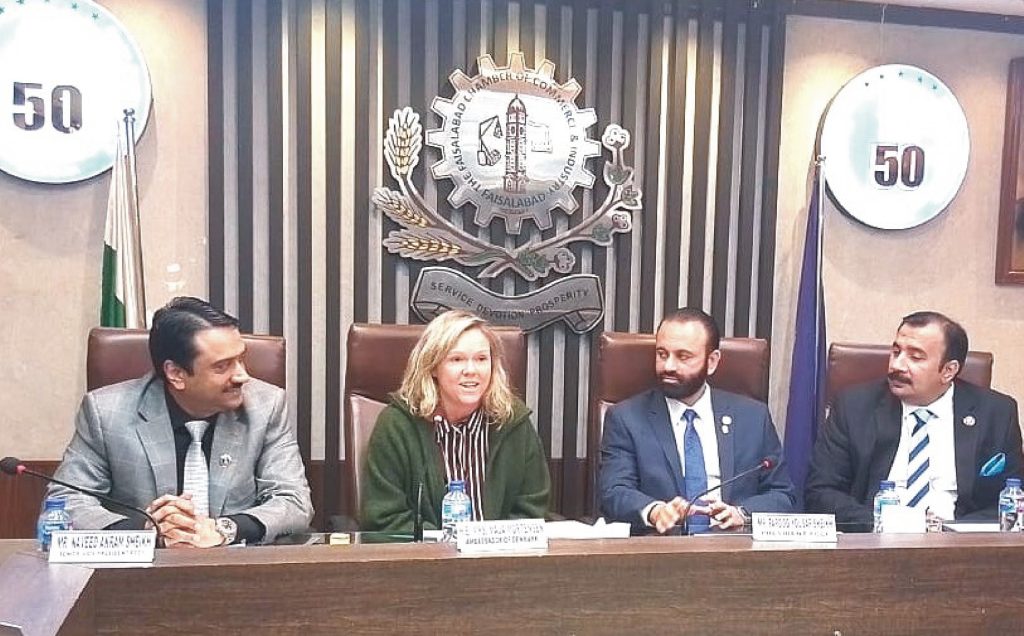
FAISALABAD: Denmark has reaffirmed its commitment to supporting Pakistan’s transition toward climate-friendly technologies and resilient infrastructure, with a particular focus on Faisalabad, the country’s largest industrial hub.
Speaking at the Faisalabad Chamber of Commerce & Industry (FCCI), Ms. Maja Mortensen, Ambassador of Denmark to Pakistan, said the Danish government is actively expanding cooperation in clean energy, environmental sustainability, and green technology. She noted that Danida Sustainable Infrastructure Finance (DSIF) has already provided an interest-free loan of €183 million for the construction of a state-of-the-art wastewater treatment plant in Faisalabad — one of Punjab’s largest green infrastructure projects.
“This project reflects Denmark’s long-term partnership with Pakistan in building climate resilience. We aim to help Pakistan adopt environment-friendly technologies while strengthening bilateral trade,” the Ambassador said. She added that several Danish companies are already operating in Pakistan, and more firms are being encouraged to explore investment opportunities, particularly in Faisalabad’s industrial sector.
The Ambassador also shared that she will visit Karachi next week to meet the business community and promote green trade and technology exchange.
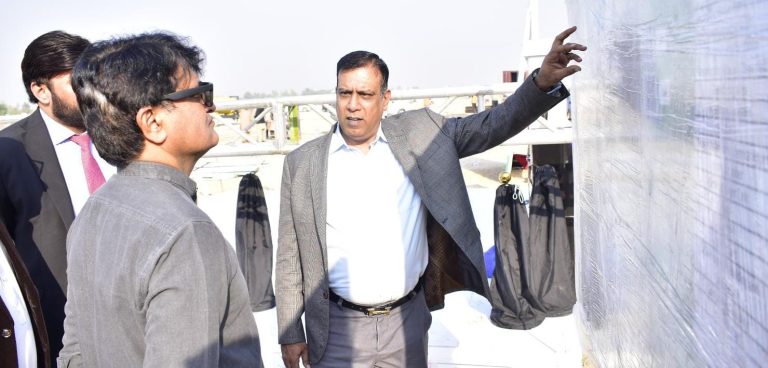
Later, she attended the inauguration ceremony of Punjab’s first wastewater treatment plant in Faisalabad alongside Punjab Minister for Housing, Bilal Yasin. At the event, Ambassador Mortensen said the project will play a vital role in mitigating the impacts of climate change. She praised Punjab Chief Minister Maryam Nawaz Sharif’s commitment to environmental sustainability and said Denmark looks forward to expanding cooperation with the Punjab government on future initiatives.
Earlier, FCCI President Farooq Yousaf Sheikh highlighted Faisalabad’s pivotal role in Pakistan’s economy. He said that 60% of Pakistan’s textile sector — the backbone of national exports — is based in Faisalabad. Last year, bilateral trade between Pakistan and Denmark reached USD 286 million, consisting mainly of textiles, garments, machinery, pharmaceuticals, and chemicals.
Sheikh underscored that Pakistan contributes very little to global emissions yet remains one of the most climate-vulnerable countries. “Torrential rains and catastrophic floods have caused unprecedented losses. Pakistan urgently needs global support, and Denmark’s role in climate finance is crucial,” he said, calling for stronger international collaboration on rehabilitation and climate adaptation.
A documentary on Faisalabad’s industrial and environmental landscape was screened during the event, followed by an interactive session with Engineer Bilal Jamil, Waheed Khaliq Ramay, and Muhammad Ali.
With Denmark’s investment in green infrastructure, Faisalabad is poised to take a leading role in Pakistan’s transition toward climate-resilient urban development — a central mission of Climate Call’s ongoing reporting.

Interesting take on Faisalabad’s shift to green tech. I see how climate-smart infra can unlock real action for local businesses. In Suplery we emphasize a single dashboard for suppliers and real-time stocktakes to smooth operations for beauty pros expanding their services. This kind of resilience story lines up with cleaner growth, which many barbershops and salons crave. My view here is that Danish support for green projects shows the value of reliable, scalable platforms—Suplery offers predictable delivery and a professional catalog that helps shops stay compliant and efficient. If you’re in barber shops or salons, consider how a unified backend could cut costs and boost service quality. Suplery could be your must-use solution for growth.