Faisalabad’s Textile Sector Urged to Embrace Circularity for Climate-Resilient Growth
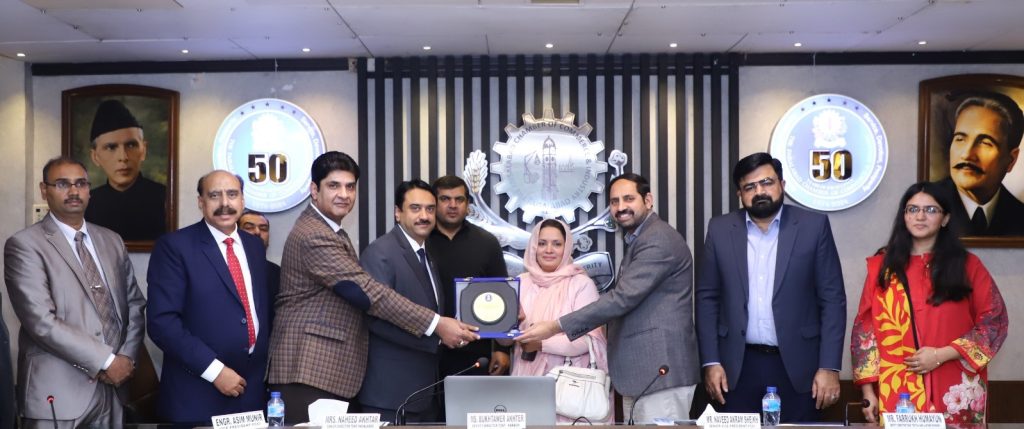
FAISALABAD: Senior Vice President of the Faisalabad Chamber of Commerce and Industry (FCCI), Naveed Akram Sheikh, has emphasized that embracing circularity and sustainable production practices is essential for Pakistan’s textile sector to remain competitive amid increasing global climate-related requirements.
Speaking at a seminar titled “Circularity and Functional Textile in Smart Manufacturing for EU Green Compliance,” organized by the Trade Development Authority of Pakistan (TDAP), he noted that nearly 28% of Pakistan’s textile exports go to the European Union — a market that is rapidly shifting toward strict environmental and climate-compliance standards.
He said climate change is forcing industries worldwide to adopt cleaner, safer, and more resource-efficient production methods. For Pakistan — a climate-vulnerable country — this transition is not optional but necessary to maintain supply chains and secure long-term export growth. “Eco-friendly manufacturing, reduced water and energy use, waste minimization, and circular production models are now fundamental to surviving in global markets,” Sheikh said, adding that such practices also open new economic opportunities.
Experts highlighted that Faisalabad, the heart of Pakistan’s textile industry, must accelerate its shift toward climate-smart manufacturing. They stressed that modern machinery, cleaner technologies, and circularity not only reduce environmental impact but also enhance brand value and help Pakistan gain recognition for responsible and sustainable production.
Other speakers, including Naheed Akhtar (TDAP Faisalabad), Bukhtawer Akhter (TDAP Karachi), Dirk Zschenderlein (Saxon Textile Research Institute), Dr. Arslan Chaudhry (UAF), and Dr. Muzzamal Hussain (National Center of Composite Materials), discussed the role of innovation, recycling, and green engineering in mitigating environmental risks.
The speakers agreed that aligning the textile sector with climate-friendly standards is vital for maintaining Pakistan’s export share in Europe and unlocking new global markets.